
In many respects The Eye in the Door is a sequel to Pat Barker’s 1992 novel Regeneration. Barker found the sources for both novels in accounts of the lives of two historical figures—the famous antiwar poet Siegfried Sassoon and William Rivers, a neurologist who treated soldiers who had returned from the front in World War I. The real Rivers actually worked at Craiglockhart, a hospital in Scotland, and he did treat Sassoon there in 1917 and in London in 1918. Barker’s imagination transforms these historical sources and creates complex literary characters who interact with one another and with a variety of wholly imagined characters. One of the imagined characters in Regeneration was Billy Prior, who suffered from shell shock, now known as post-traumatic stress disorder. He was discharged from the hospital and assigned to permanent home service. Sassoon was discharged to active duty in November, 1917. The Eye in the Door continues Barker’s exploration of their lives and adds Charles Manning, an officer wounded in France and now suffering panic attacks. Prior is Rivers’ patient in his London clinic, and Sassoon appears late in the novel when he is sent to an American Red Cross hospital in London after suffering a minor head wound at the front. Rivers is called in by Sassoon’s attending physician because of recurring symptoms of emotional distress.
In Regeneration her focus was on the psychological impact of war on the combatants. The horrors of post-traumatic stress disorder are made vivid by the soldiers’ nightmares and flashbacks. In The Eye in the DoorBarker broadens her approach to include an indictment of repression and paranoia on the home front. The issues she raises reflect the contradictions and incongruities that are the basis of people’s lives in a country at war.
Billy Prior’s psychological crisis dominates The Eye in the Door. After successful treatment at Craiglockhart, Prior is discharged and sent to London to work in an intelligence unit in the Ministry of Munitions. There he investigates the activities of notorious pacifists. The woman he is sent to interview in a prison outside London is Beattie Roper, an elderly woman with whom he lived for a year when he was a small child. Her daughter, Hettie, was one of his closest friends. Prior’s return to his roots forces him to address the question of his allegiance—to the people he grew up with and to his country.
When Prior interviews Beattie, he begins to suspect that she was framed. He knows that she is a pacifist who hides deserters and helps provide them safe passage to Ireland. She is in prison, however, because she has been implicated in a plot to assassinate the prime minister. Actually, she had no part in such a plot: An informant, Lionel Spragge, hired by the Ministry of Munitions, altered the facts to implicate her. Why this need to imprison an old woman for life? Prior suspects that the Ministry of War has made Beattie a scapegoat. She will be a lesson to others. Clearly, Beattie is not under the control of German spies or other agents of a secret British organization. Her allegiance is to her children and to the young men she believes should not be sent to die in the trenches of France. In a time of war, however, governments will not tolerate any actions that may be construed as attacks upon the established order. Everyone must be on the same side; thus Beattie is sacrificed to “the cause.”
Another instance of the government’s repression is its treatment of homosexuals during the war. Certain people within the War Ministry believed that gays and lesbians were part of an intricate German plot to undermine the foundations of British culture and the British government. One of the people most afraid of exposure is Charles Manning. He returned from the front with a severely damaged knee and knows that he will never be sent back to the trenches. Still, he has repeated flashbacks of horrific scenes, and he suffers from panic attacks. Manning is happily married, and he loves his children, but he also has a secret life as a gay man. He has come to accept that part of his identity, but he is vulnerable because his homosexuality defines him as a pervert and as a criminal. He is terrified that someone will turn him in.
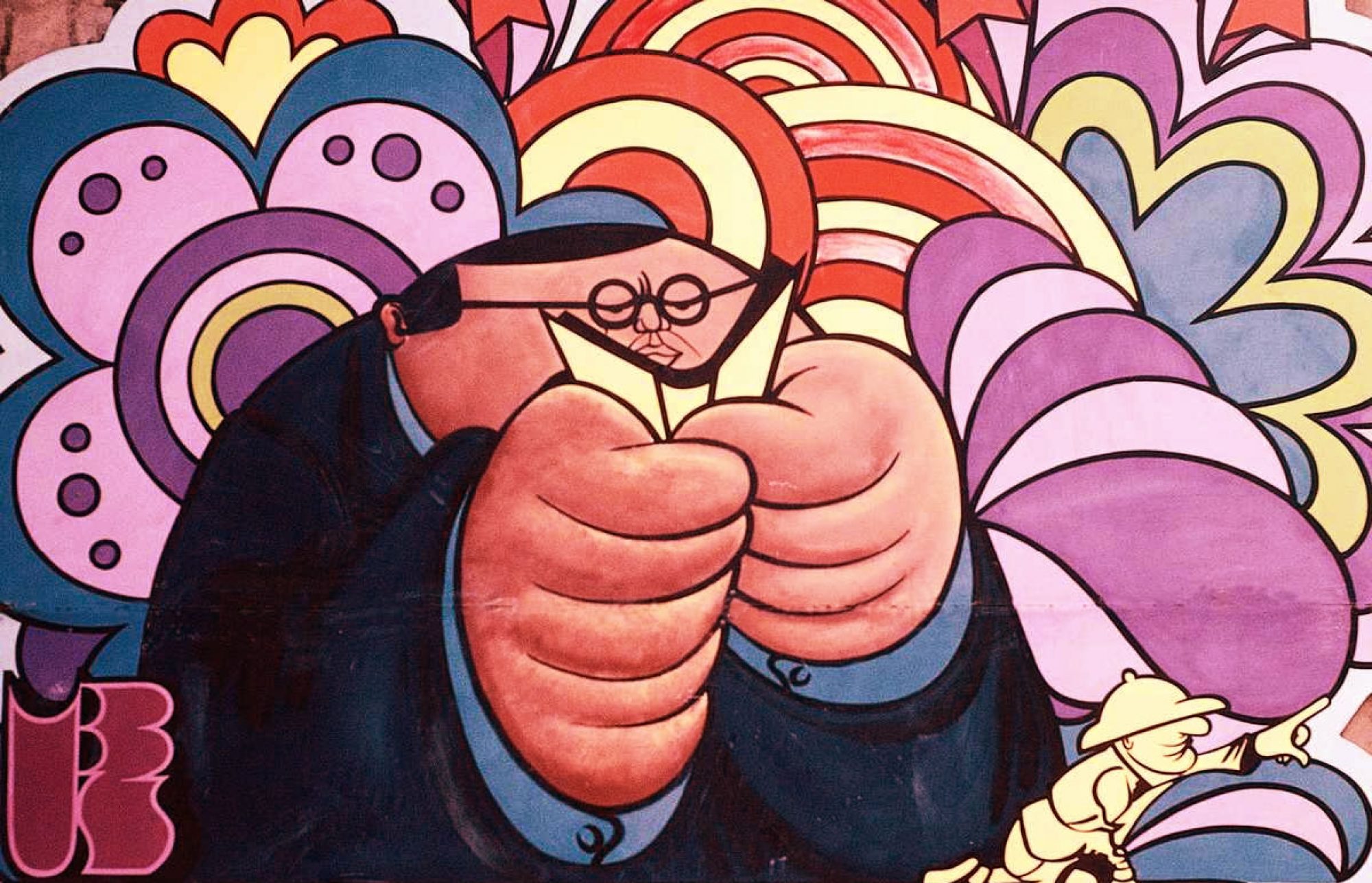
The fears that are provoked when paranoia and repression hold sway are evoked by the guiding metaphor of the novel, the eye in the door….
“The Eye in the Door – Summary” Literary Masterpieces, Critical Compilation Ed. Frank Northen Magill. eNotes.com, Inc. 1991 eNotes.com 23 May, 2018 <http://www.enotes.com/topics/eye-door#summary-summary>