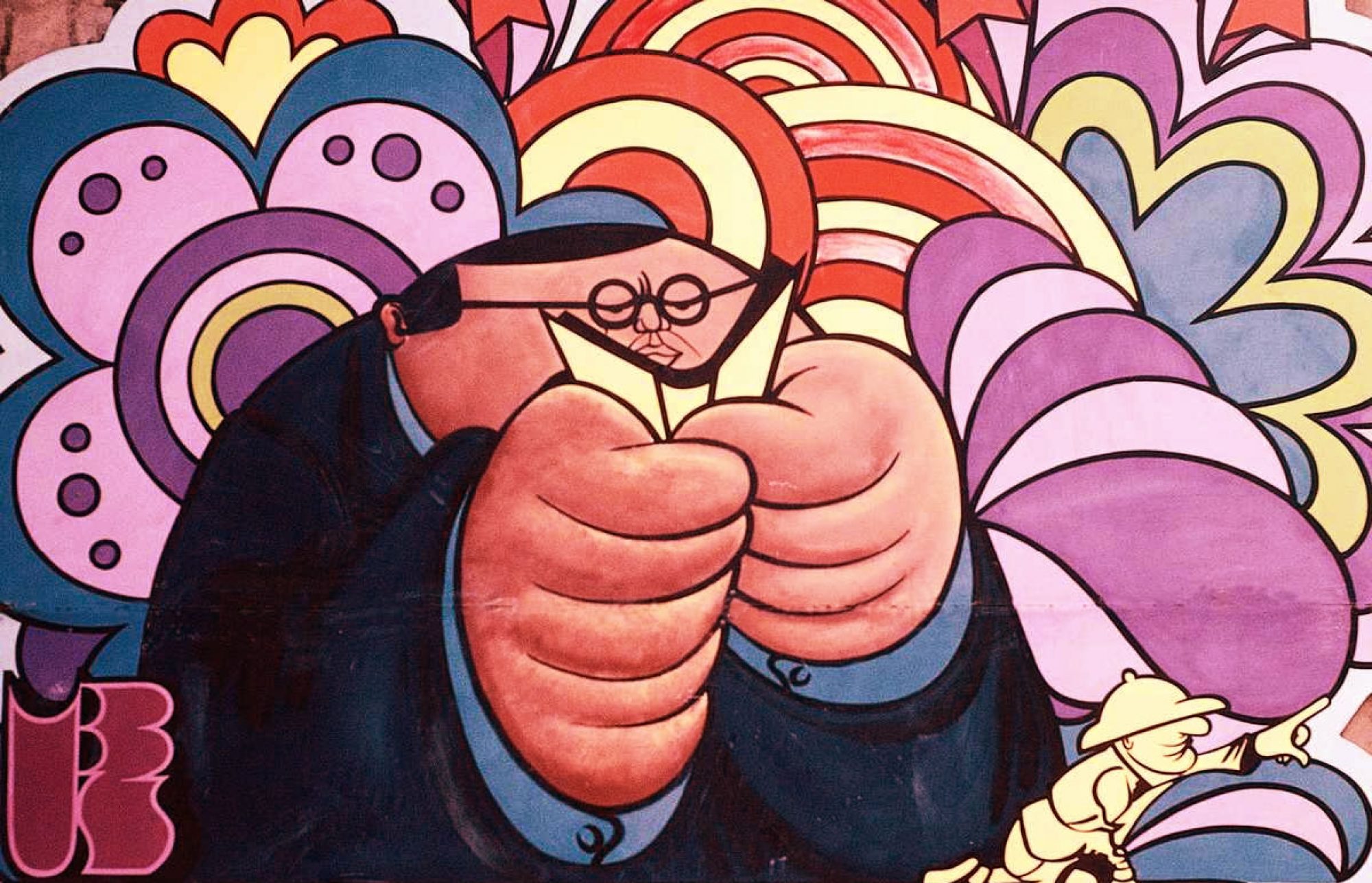

The Fire & the Rose, by Sir Arthur Bryant
In his foreword to this brilliantly written book the author, one of England’s most distinguished historians, writes: “”There are timeless moments when the history of a nation, sometimes of mankind itself, turns on what, in a few hours, days or weeks, men can make of the time given them.”” Nine of these “”timeless moments”” in English history, when “”men were pitted against time and one another,”” make up the book. All were chosen by the author from his own works; all have been told many times, but seldom as vividly as here. “”The Holy Blissful Martyr”” retells the story of the battle for legal power between Henry II, who established English Common Law, and Thomas Becket, Archbishop of Canterbury, which ended in 1170 with Becket’s murder. “”The Grey Goose Feather,”” the tale of the English victory over the French at Crecy in 1346, includes a fascinating description of the secret weapon of the day, the English longbow, its arrows plumed with goose feathers from village geese. Other essays tell of “”The Hurling Time,”” the Peasant Revolt of 1381 under Wat Tyler; the escape of Charles II to France in 1651 after the battle of Worcester; and five tense moments in the Napoleonic Wars: the naval mutinies of 1797 at Spithead and the Nore; the timeless moments of Nelson’s victories at the Nile and Trafalgar; the long-drawn-out heartbreak of the British retreat to Corunna in Spain under Sir John Moore in 1808; and finally, the day-long moment, forever timeless, of Waterloo. A book for all historians, students, and general readers not only interested in the English past but also the present use of the English language as it should be written.
( Courtesy of KIRKUS )
*** please note, available herein, that this revised edition contains two additional chapters: The Rising In The North 1842, ( Dark Satanic Mills ) ; and, The Summer Of Dunkirk 1940.
The Martian, Andy Weir
Malcolm Gladwell, The Tipping Point
Douglas Coupland, Player One
William Abrahams, Prize Stories 1995, The O. Henry Awards 75th Anni Edition
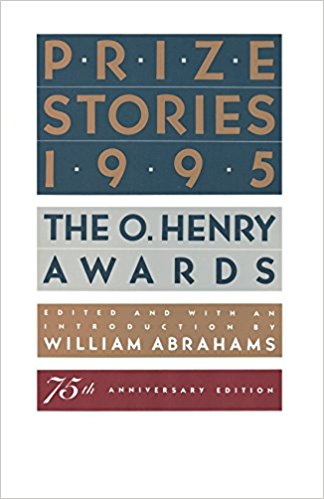
382 pages
Padma Perera, Birthday Deathday and other stories
Third collection of short stories by this award-winning Indian writer – stories rooted in the Indian culture and in the lives of women there.
( Courtesy of Biblio, 178 pages )
John Shirley, BioShock Rapture
It’s the end of World War II. FDR’s New Deal has redefined American politics. Taxes are at an all-time high. The bombing of Hiroshima and Nagasaki has brought a fear of total annihilation. The rise of secret government agencies and sanctions on business has many watching their backs. America’s sense of freedom is diminishing . . . and many are desperate to take that freedom back.
Among them is a great dreamer, an immigrant who pulled himself from the depths of poverty to become one of the wealthiest and admired men in the world. That man is Andrew Ryan, and he believed that great men and women deserve better. And so he set out to create the impossible, a utopia free from government, censorship, and moral restrictions on science–where what you give is what you get. He created Rapture—the shining city below the sea.
But as we all know, this utopia suffered a great tragedy. This is the story of how it all came to be . . .and how it all ended.
( from the sleeve, 431 pages )
William Gibson, Mona Lisa Overdrive
William Gibson, author of the extraordinary multiaward-winning novel Neuromancer, has written his most brilliant and thrilling work to date… The Mona Lisa Overdrive. Enter Gibson’s unique world – lyric and mechanical, erotic and violent, sobering and exciting – where multinational corporations and high tech outlaws vie for power, traveling into the computer-generated universe known as cyberspace. Into this world comes Mona, a young girl with a murky past and an uncertain future whose life is on a collision course with internationally famous Sense/Net star Angie Mitchell. Since childhood, Angie has been able to tap into cyberspace without a computer. Now, from inside cyberspace, a kidnapping plot is masterminded by a phantom entity who has plans for Mona, Angie, and all humanity, plans that cannot be controlled… or even known. And behind the intrigue lurks the shadowy Yakuza, the powerful Japanese underworld, whose leaders ruthlessly manipulate people and events to suit their own purposes… or so they think.
( from the sleeve, 309 pages )
W.H. Auden, The Portable Greek Reader
It is commonplace to say that our civilization is built on the ruins of Greece. W. H. Auden’s splendid anthology locates the truth behind the truism, while filling in the gaps in our knowledge of a people who gave us so much of our cultural legacy. Every page in The Portable Greek Reader contains some fundamental precursor of the ways in which we think about heroism, destiny, love, politics, tragedy, science, virtue, and thought itself, Included are excerpts from the mythologies of Hesiod; the martial epics of Homer; the dramas of Aeschylus, Sophocles, and Euripides; the philosophy of Plato, Aristotle, and Heraclitus; Aesop’s fables; poems by Pindar and Sappho; the scientific writings of Euclid, Galen, and Hippocrates; and the history of Thucydides. Presented in their most elegant and authoritative translations, and accompanied by Auden’s brilliant introduction, these selections recreate the Greek world in all its splendor, strangeness, and sophistication.
“Engaging and full and intelligent … a command performance, brought off with considerable aplomb.”
—The New York Times
( Courtesy of GoodReads, 728 pages )